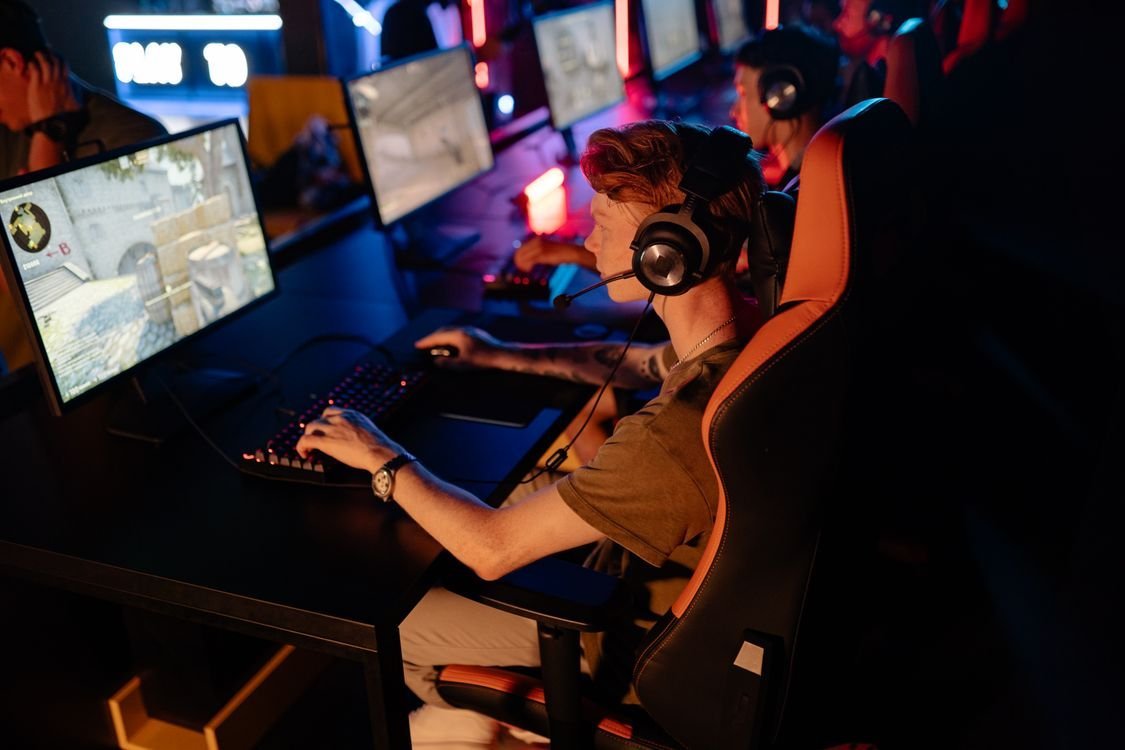
AI anti-cheat in Valorant works by combining Riot’s kernel-level driver, Vanguard, with machine-learning models that study how you play. Vanguard blocks known cheat software on your PC, while the AI analyses your aim, reaction times, and movement, flagging play that looks statistically impossible for a human. Flagged accounts are reviewed and banned — sometimes with a hardware ban.
If you have ever lost a ranked game to someone snapping onto heads through smoke, this guide explains why they were not caught instantly.
What Is AI Anti-Cheat, and How Is It Different From Old Anti-Cheat?
Traditional anti-cheat worked like a bouncer with a list of banned names: it scanned for known cheat programs and blocked anything it recognised. That worked when cheats were simple programs that rarely changed.
Modern cheats update within hours of every patch and hide inside legitimate-looking processes, so signature scanning alone cannot keep up. AI anti-cheat asks a different question: not “is this exact program on the banned list?” but “does this player’s behaviour look human?” Models trained on millions of hours of pro, ranked, and confirmed cheater play learn the statistical fingerprint of each. A cheater’s aim does not just look fast; it moves in ways human muscles and reaction times cannot produce.
Old anti-cheat caught cheats it already knew about. AI anti-cheat catches cheats it has never seen before, because it recognises the behaviour rather than the program.
How Does AI Anti-Cheat Work in Valorant?
So how does AI anti cheat work in Valorant, in practice? The system has two halves. The first is Vanguard, Riot’s kernel-level driver. It loads when your PC boots and runs at the deepest privilege level of your operating system. When you launch Valorant, Vanguard checks for known cheat software and tampered drivers, and keeps watching while you play.
The second half is server-side behaviour analysis. Every match generates a stream of data — where your crosshair moves, how fast you react to an enemy appearing, how often you pre-aim a corner before anyone is visible. Models compare that stream against what legitimate players at your rank actually do.
Neither half works alone. Vanguard catches the cheat software; the behaviour models catch cheaters whose software Vanguard has not seen yet.
What Does Vanguard Actually Watch While You Play?
Vanguard monitors running processes and drivers, inspects memory regions that cheat software typically tampers with, and blocks attempts to inject code into the game. It also checks your system at boot, before cheats have a chance to load and hide.
It does not read your personal files or watch your screen — Riot states Vanguard collects no personal data, and independent researchers have confirmed its traffic is limited to anti-cheat telemetry. The trade-off is real — a kernel driver is a deep level of trust to give a game — but it is also why Valorant has one of the lowest cheater rates in competitive shooters, and why the game refuses to launch if Vanguard is disabled.
How Do AI Systems Tell a Cheater From a Very Good Player?
A Radiant player and an aimbot user both hit headshots. How does a model tell them apart? It is not looking at accuracy — it is looking at the shape of the movement. A human flick accelerates, decelerates, and micro-corrects as the crosshair settles; even the fastest pro flick takes measurable time and overshoots slightly. An aimbot’s flick is too linear, its correction too perfect, or it locks onto a target the player could not have seen yet.
Reaction time is another giveaway. Humans react in roughly 180 to 250 milliseconds, and that number varies moment to moment. A triggerbot fires the instant an enemy’s head crosses the crosshair — in single-digit milliseconds, every single time, with almost no variance. No human is that fast and that consistent. Wallhacks show up the same way: pre-aiming the exact pixel where a hidden enemy stands, round after round, is a pattern no legitimate player produces.
The Flick Test: A Mini-Experiment You Can Run Yourself
Here is a two-minute test. Load into the practice range, stand in one spot, and flick between the far-left and far-right bots as fast as you can for thirty seconds.
Three things will stand out. First, your crosshair overshoots the target and comes back; it almost never stops dead on the head. Second, your flick speed varies — some flicks are crisp, some sloppy. Third, your timing is uneven: the gap between seeing the bot and firing changes every time.
Now imagine a bot doing the same drill. Every flick would land dead centre with no overshoot, take the same number of milliseconds, and fire with barely any timing variation. That unnerving consistency is exactly what the models measure. Human excellence is noisy. Machine precision is silent.
What Happens When AI Anti-Cheat Flags You?
A flag is not a ban. When the behaviour models score an account as suspicious, it enters a review pipeline. Riot’s team examines the flagged matches, and the account is often placed under closer observation while more evidence is gathered.
A first offence typically means a permanent account ban, and serious offenders get a hardware ban, which blocks the machine’s hardware identifiers from playing Valorant at all — a banned cheater cannot simply make a new free account and queue again on the same PC.
Riot also runs ban waves, banning thousands at once. The delay lets Riot study how the cheat works and patch detection so it is caught instantly next time, instead of tipping off the cheat developers.
Why Do Cheaters Still Show Up in Your Ranked Games?
If the system is this good, why did a cheater ruin your game last night? Three reasons. First, detection takes time by design — the models need a pattern, not a single round, so a new cheat gets a few matches before the evidence is strong enough. Second, cheat developers are in an arms race with Riot: every detection method gets studied, and the next cheat version is built to hide from it. Third, some cheats are deliberately subtle. A “soft” aimbot that only corrects your aim by a few degrees is much harder to distinguish from a skilled player and can survive far longer than a blatant rage cheat.
Most blatant cheaters last days, not months.
How Can You Avoid a False Ban?
Play on your own account, on your own hardware, with no third-party software that interacts with the game — no macros, no recoil scripts, no overlay tools that read game memory. Keep your drivers up to date, because outdated drivers are exactly what Vanguard blocks. And do not share your account: if someone else cheats on it, the ban lands on the account, not the person.
AI anti-cheat will never be perfect or finished. Every patch changes the game, every detection method breeds a countermeasure, and every new cheat forces the models to learn again. But the direction is clear: the best anti-cheat watches behaviour, not just files — and a cheater’s biggest enemy is the fact that human aim is beautifully, measurably imperfect.
FAQ
How does AI anti cheat work in Valorant?
It combines Vanguard, a kernel-level driver that blocks known cheat software, with machine-learning models that analyse your aim, reaction time, and positioning across matches. Accounts whose behaviour looks statistically impossible for a human are reviewed and banned, often with a hardware ban.
Is Vanguard safe to install?
Vanguard runs at kernel level, a deep level of system access, but it only monitors processes, drivers, and memory related to cheating. Riot states it does not collect personal data, and independent researchers have confirmed its traffic is limited to anti-cheat telemetry.
Can AI anti-cheat detect aimbots it has never seen before?
Yes. Behaviour-based detection does not need to recognise the cheat program itself. It recognises the inhuman patterns the cheat produces — perfectly linear flicks, single-digit reaction times, pre-aiming invisible enemies — so a brand-new cheat still leaves the same fingerprint.
How long does it take for a cheater to get banned in Valorant?
Blatant cheaters are often flagged within a few matches and banned in days, sometimes as part of a ban wave. Subtle cheats that only slightly assist aim can survive longer, because the system needs more matches to build a confident pattern.