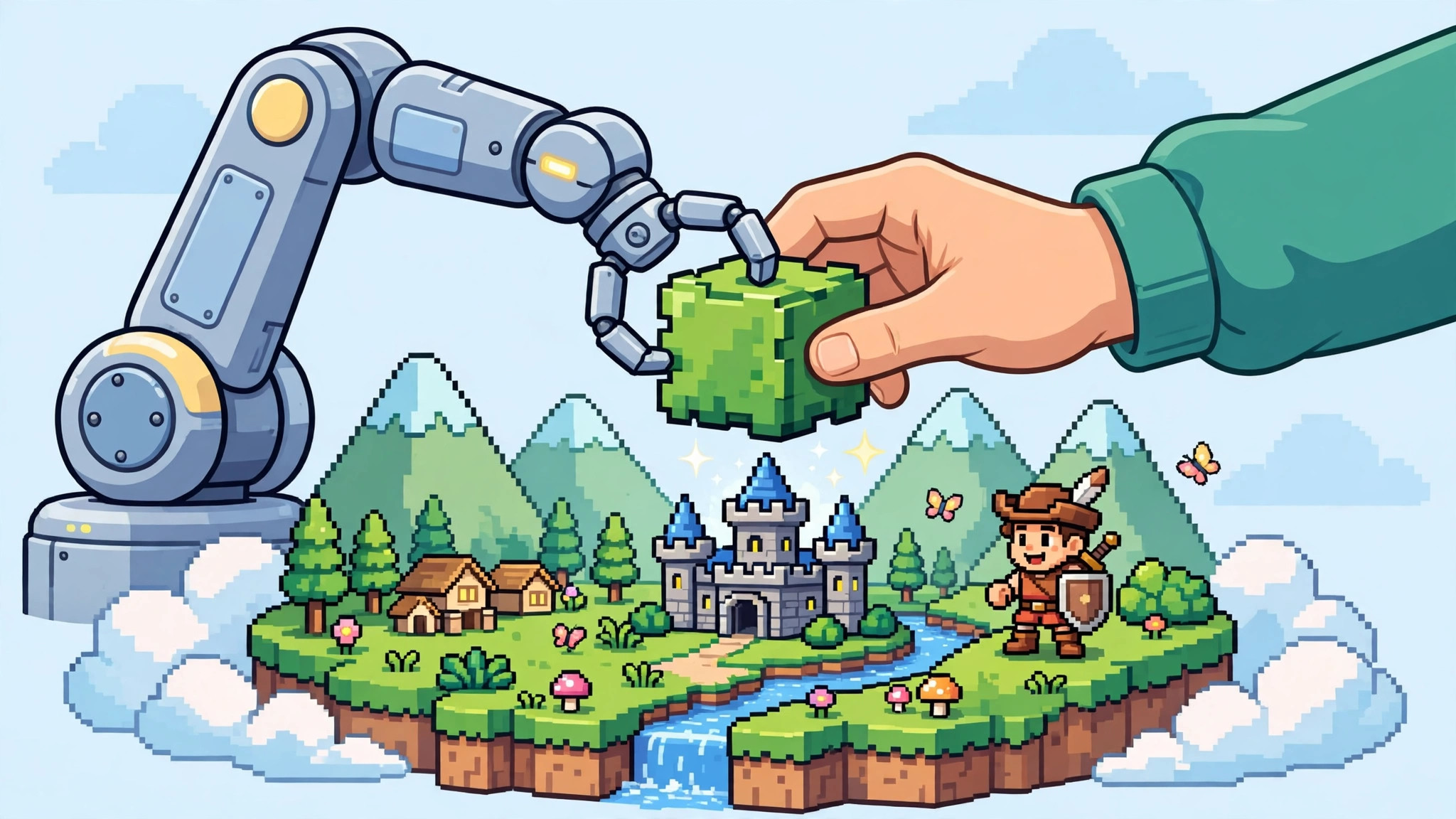
Artificial Intelligence is increasingly used across game development. AI can generate art, write code, design levels, create dialogue, compose music, and even help test games. However, most successful games are still built through a combination of human creativity and AI-assisted tools.
The short answer
AI can create parts of a game—and sometimes simple games end-to-end—but humans are still essential.
For simple games such as puzzles, 2D platformers, endless runners, or prototype concepts, AI can generate a large portion of the content. For complex commercial games, AI acts more like a powerful assistant than a fully autonomous game studio.
What AI Can Already Do in Game Development
- Generate Game IdeasAI can brainstorm concepts, genres, mechanics, and story hooks.Example:“A cyberpunk farming simulator with roguelike combat.”
- Write Game CodeAI coding assistants can generate scripts in languages such as C# (Unity), C++ (Unreal Engine), GDScript (Godot), and JavaScript.Example tasks:
- Player movement
- Enemy AI
- Inventory systems
- Save/load functionality
- Create Art AssetsImage-generation models can produce concept art, textures, icons, character portraits, and UI elements.ImportantCommercial projects should carefully review licensing, copyright, and training-data considerations before using AI-generated art.
- Generate Music and Sound EffectsAI tools can create background music, ambient sounds, and basic effects. Human composers and sound designers are often still preferred for high-end productions.
- Design Levels and WorldsProcedural generation powered by AI can build maps, dungeons, quests, and terrain.Common in:
- Roguelikes
- Survival games
- Open-world games
- Sandbox games
- Write Dialogue and Story ContentAI can draft character conversations, lore, item descriptions, and quest text. Developers usually edit and refine the output for quality and consistency.
- Test GamesAI-driven testing tools can simulate players, identify bugs, and detect balance issues faster than manual testing alone.
What AI Still Struggles With
- Strong Creative DirectionAI can generate many ideas, but it does not consistently produce a cohesive artistic vision.
- Deep Game Design DecisionsBalancing mechanics, pacing progression, and crafting memorable experiences still requires experienced designers.
- Large-Scale Production ManagementComplex games involve teams, budgets, schedules, legal issues, marketing, and platform requirements that AI cannot fully manage.
- Reliable OriginalityAI often remixes patterns from existing data. Creating truly distinctive games remains a human strength.
Can AI Build a Complete Game by Itself?
For simple games, the answer is increasingly yes.
For example, an AI-assisted workflow can generate:
- A game concept
- Basic code
- Placeholder art
- Simple sound effects
- A playable prototype
Many hobbyists already create small games this way.
For a commercial-quality game comparable to major releases, AI cannot currently replace a full development team. It can accelerate development, but humans still guide the process.
Popular AI Tools Used by Game Developers
| Purpose | Examples |
|---|---|
| Code assistance | GitHub Copilot, ChatGPT, Cursor |
| Art generation | Midjourney, Stable Diffusion, DALL·E |
| Music generation | Suno, Udio, AIVA |
| Voice generation | ElevenLabs, PlayHT |
| Game engines with AI features | Unity, Unreal Engine, Godot (via plugins) |
These tools are typically used together rather than individually.
A Practical AI-Assisted Workflow
- Start with an ideaUse AI to brainstorm genres, mechanics, and themes.
- Build a prototypeGenerate initial scripts and game logic with AI coding tools.
- Create placeholder assetsUse AI-generated art, music, and sounds during early development.
- Playtest and iterateHuman designers refine gameplay, balance, and user experience.
- Replace placeholdersFor a polished commercial release, many teams replace temporary AI assets with professionally produced content.
Important
Legal and Ethical Considerations
If you plan to sell a game, pay attention to:
- Licensing terms of AI tools
- Copyright ownership of generated assets
- Use of third-party training data
- Platform policies (Steam, consoles, mobile stores)
Rules continue to evolve, so developers should review current policies before release.
Future Outlook
Over the next few years, AI will likely become even more integrated into game development.
Expect improvements in:
- Real-time NPC conversations
- Procedurally generated worlds
- Automated animation
- Personalized gameplay experiences
- Faster content production
The most successful developers will probably be those who combine human creativity with AI acceleration.
Final Verdict
AI can absolutely help create video games, and for small projects it can generate a surprisingly large portion of the game. However, current AI tools work best as collaborators rather than replacements for human designers, programmers, artists, writers, and producers.
If you want to make a game today, AI can significantly speed up the process, reduce costs, and help you prototype ideas—but the final quality and originality still depend heavily on human direction.
Short answer: AI can create parts of a game, sometimes even simple games end-to-end, but humans are still essential for building outstanding games.